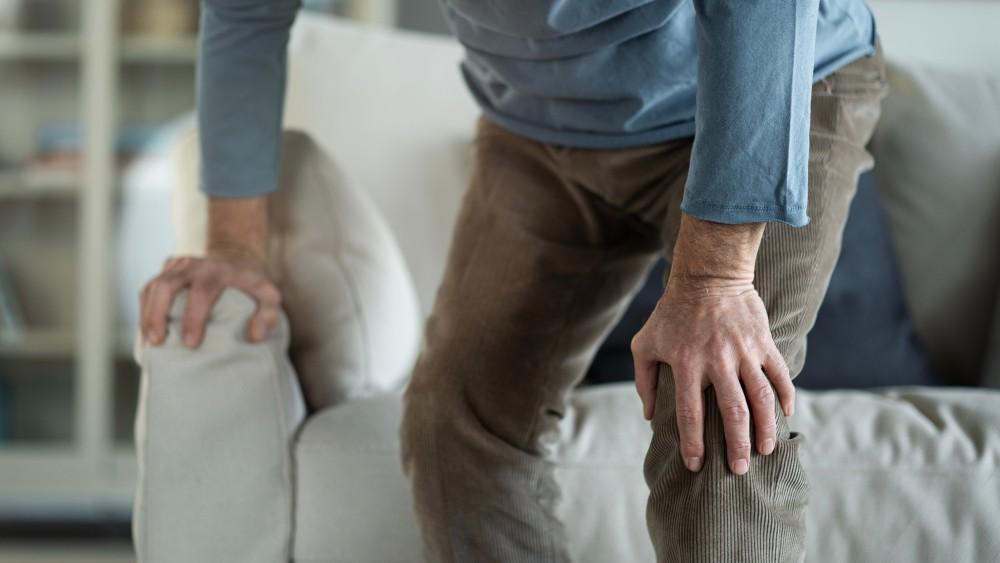
All your joints work hard, but your knees might work the hardest. Not only are your knees the largest weight-bearing joints in your body; they’re also critical to your ability to get around.
Given this impressive workload, it’s no wonder that knee problems crop up as much as they do — at any given time, millions of Americans are hobbling around on achy and painful knees.
Board-certified orthopedic surgeon Gregg K. Satow, MD, has extensive experience helping patients to navigate painful and chronic knee conditions. Here, we look at some common culprits behind knee pain and how we can get you back to pain-free movement.
Knee osteoarthritis (OA)
One of the biggest drivers of chronic knee pain is osteoarthritis (OA), a degenerative form of arthritis.
With OA, the protective cartilage inside the joints that allows for smooth gliding between bones begins to break down. Over time, this causes friction between the bones, leading to the hallmarks of OA — pain, inflammation, and stiffness.
At least 33 million adults in the United States have OA, and the knees are the most commonly affected joints. Among adults over 45, more than 30% have symptomatic knee OA.
Patellofemoral pain syndrome
Another road to knee pain is patellofemoral pain syndrome (PPS), also called runner’s knee.
Under normal circumstances, your kneecap (patella) slides along a groove in your thighbone (femur). With PPS, your patella isn’t sliding along the groove as it should, which leads to pain around the front of your knee.
Anterior cruciate ligament (ACL) and meniscus tears
When it comes to knee injuries, two of the more common include ACL and meniscus tears. In fact, ACL tears account for about half of all knee injuries.
Each of your knees contains ligaments that stabilize the joint — your ACL crosses the front of your knee and provides rotational stability. If you land badly or twist your knee, you can tear this ligament, leaving you with an ACL tear that renders your knee painful and unstable.
Moving to another area of the knee, within each of these joints there are two wedge-shaped pieces of cartilage called menisci that provide shock absorption between your thigh bone and shin bone. If this tissue is damaged, either on the heels of an acute injury or as a result of overuse, you can be left with a torn meniscus and knee pain.
There are other roads to knee pain, such as knee dislocations and sprains, but the above account for most of the burden.
Next steps when you have knee pain
Given the many potential culprits behind knee pain, your first order of business is to schedule a diagnostic consultation so that we can identify the root cause of the issue.
During your evaluation, Dr. Satow reviews your symptoms, performs a physical examination, and uses advanced imaging to get a clearer picture of what’s happening inside your knee.
From there, we can design an appropriate treatment program that suits your goals and needs. It’s difficult to say what that might be until we know exactly what we’re up against — how we go about treating knee OA is very different from how we treat an ACL tear, for example.
Unfortunately, knee pain isn’t likely to just go away on its own, so seeking help sooner rather than later is the best step forward.
To get that ball rolling, contact Gregg K. Satow, MD, online or by phone, to schedule an appointment at our Monterey, California, practice.